A defender is closing in, the touchline is getting closer, and the ball is sitting at your feet. You have about a second to make a decision, and the opponent in front of you has probably faced every trick you can remember from training.
This is where good dribblers separate themselves from players who have simply memorised a few fancy foot movements.
The secret to beating an opponent in soccer rarely lies in how many tricks a player can perform. It comes down to recognizing a defender’s balance, creating doubt with a small movement, then exploiting the space before the opponent can recover. Lionel Messi has built countless attacking moments around subtle shifts of weight, while Cristiano Ronaldo’s explosive changes of direction have shown how a well-timed trick can open a route towards goal.
For young players, learning effective 1v1 soccer moves means developing skills that survive contact with real defenders, limited space and the pressure of a match. Five moves deserve particular attention because each offers a practical solution to a different situation on the pitch.
1. The Body Feint: Make the Defender Move First
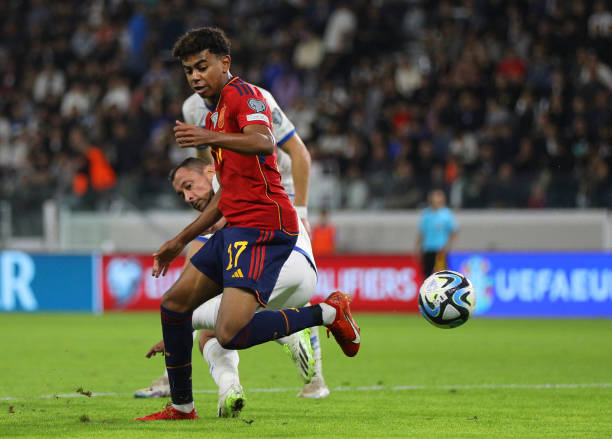
The body feint is one of the most useful dribbling skills youth soccer players can learn because it relies on balance, timing and deception rather than complicated footwork. The objective is to convince a defender that you intend to move in one direction, then take the ball the other way before they can adjust.
How to perform the body feint
- Approach under control. Dribble towards the defender with small touches, keeping the ball close enough to change direction without losing your balance.
- Sell the fake. Dip one shoulder, shift your hips and lean slightly towards the side you want the defender to believe you will attack.
- Push the ball away. Use the outside of your opposite foot to move into the space on the other side.
- Accelerate immediately. Take a longer touch into the available space and increase your speed before the defender can recover.
When to use it: The body feint works particularly well against a defender standing square in front of you, especially when attacking down the wing or approaching the edge of the penalty area.
Coaching tip: Practise the movement on both sides, concentrating on the shoulder drop and the first accelerating touch. A convincing fake followed by two quick steps is usually more useful than an exaggerated movement that gives the defender time to react.
2. The Scissors: Sell One Direction, Escape the Other
The scissors move, commonly called a step-over, is a familiar feature of attacking football because it allows players to disguise their intentions while maintaining forward movement. Cristiano Ronaldo used variations of the move throughout his career, often combining deceptive footwork with the acceleration needed to exploit the opening.
The mistake many beginners make is performing several step-overs without provoking any reaction. The defender remains balanced, the attacker loses momentum, and the trick becomes an invitation to tackle.
Improving the first touch can help players maintain control as they approach a defender, giving them a better starting position for executing the move and accelerating into the space that follows.
How to perform the scissors
- Approach the defender. Carry the ball forward at a controlled speed, keeping your knees slightly bent so you can push off in either direction.
- Circle one foot around the ball. Swing your foot from the outside across the front of the ball without touching it, using your hips and shoulders to suggest a change of direction.
- Plant your foot. Place the stepping foot firmly on the ground, preparing to push off in the opposite direction.
- Exit sharply. Use the outside of your other foot to push the ball into space, then accelerate before the defender can block your route.
When to use it: Try the scissors against a defender who is waiting for you to commit, particularly in wide areas where beating the opponent can create room for a cross or a run towards goal.
Coaching tip: Begin with one step-over followed by an explosive exit. Introduce a second step-over only when the defender’s reaction makes it useful, because the objective is to create an opening rather than complete a rehearsed dance routine.
3. The Inside-Outside Touch: Beat the Defender With Rhythm
Sometimes a defender closes the space so quickly that there is little room for an elaborate feint, making the inside-outside touch a practical option for changing direction without taking several preparatory steps.
The movement uses two touches with the same foot to make the defender adjust their position twice. Its simplicity makes it one of the best dribbling skills youth soccer players can practise when learning to attack at speed.
How to perform the inside-outside move
- Carry the ball towards the defender. Keep the ball close while watching the opponent’s feet and body position.
- Touch the ball inwards. Use the inside of your foot to move the ball slightly towards the centre of your body, encouraging the defender to shift across.
- Touch it outwards. Quickly use the outside of the same foot to redirect the ball away from the defender.
- Exploit the opening. Accelerate into the available space, keeping your body between the defender and the ball when necessary.
When to use it: This move is especially useful when receiving the ball on the wing, escaping pressure in midfield or attacking a defender who tries to close you down before you can turn.
Coaching tip: Practise with both feet, since a player who can escape only towards one side becomes easier to defend against. Start slowly enough to maintain clean contact, then gradually increase the speed until both touches flow naturally.
4. The Double Touch: Exploit an Aggressive Defender
When a defender commits to a tackle, the attacker often has a brief opportunity to redirect the ball before the opponent can recover. The double touch uses that moment, combining two quick touches to move the ball away from the challenge and into space.
The technique has variations, including the inside-outside combination, so young players should focus on the underlying principle rather than worrying about memorising a particular name.
How to perform the double touch
- Invite the challenge. Approach the defender at a controlled pace, keeping the ball close enough to react when they step forward.
- Make the first touch sideways. Use the inside of your foot to shift the ball across the defender’s line and encourage them to adjust their feet or extend a leg.
- Redirect the ball. Use the outside of the same foot, or the other foot where appropriate, to take the ball away from the tackle.
- Accelerate into space. Move beyond the defender before they can regain their balance, protecting the ball if another opponent approaches.
When to use it: The double touch is useful against an opponent who lunges forward or closes down aggressively, particularly in tight spaces where a wider turn would carry the ball into another defender.
Coaching tip: Practise first against a passive opponent, then introduce a defender who can attempt a genuine tackle. The second touch should create a useful route forward, not simply return the ball to its original position.
5. The Drag-Back Turn: Escape Pressure Without Losing Possession
Not every successful one-versus-one requires an attacker to sprint past a defender towards goal. Sometimes the defender has blocked the forward route, the touchline is approaching, and protecting possession while changing direction is the smartest decision available.
The drag-back turn gives young players a reliable way to escape pressure, reset their position and identify a better passing or dribbling opportunity.
How to perform the drag-back turn
- Protect the ball. Position your body between the defender and the ball, bending your knees slightly and keeping the ball close to the foot furthest from the opponent.
- Pull the ball backwards. Place the sole of your foot on top of the ball and drag it backwards, moving your body with the ball rather than stretching your leg behind you.
- Pivot into space. Turn your hips and supporting foot towards the available space, allowing your body to follow the ball naturally.
- Move away from pressure. Push the ball into the newly created space and accelerate, looking for a forward pass, a supporting teammate or another route towards goal.
When to use it: The drag-back turn is particularly valuable when a defender blocks the forward route or forces the attacker towards the touchline. Practising the movement with both feet helps young players become less predictable in one-versus-one situations, especially when they need to turn away from pressure and accelerate into open space.
Developing that comfort on both sides also makes it easier to improve weak-foot control and confidence during individual training.
Coaching tip: Practise turning in both directions and lifting your head as soon as you complete the movement. Escaping a defender is useful, although the next decision determines whether the escape leads to an attack.
READ ALSO | Solo Soccer Drills for Center Backs: Improving Aerial Control & Clearance Under Pressure
How Youth Players Can Practice These 1v1 Soccer Moves
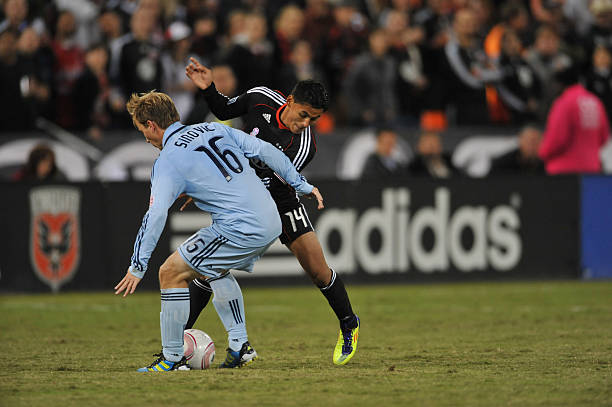
Learning a move without pressure provides a useful foundation, but the real test comes when an opponent can read your intentions, block the route and win possession. Effective youth coaching should therefore progress from basic technique to opposed practice, allowing players to make decisions rather than simply repeat movements.
A simple 20-minute session can help young players develop these skills with a ball, a few cones and a training partner.
| Time | Activity | What to practise |
|---|---|---|
| 4 minutes | Close-control warm-up | Dribble around cones using both feet, changing direction and speed while keeping your head up. |
| 6 minutes | Technique practice | Spend roughly one minute on each move, concentrating on the fake, direction change and accelerating touch. |
| 6 minutes | One-versus-one challenge | Set up two small cone goals and give the attacker five seconds to beat the defender and score before switching roles. |
| 4 minutes | Small-sided game | Reward players for beating an opponent and creating a shot or useful forward pass, while recognising good decisions to retain possession. |
As players improve, coaches can narrow the space, introduce recovering defenders and challenge attackers to use their weaker foot. Younger beginners may need more time to become comfortable with the movements, while experienced players benefit from unpredictable situations that require quicker decisions.
The aim is to develop dribbling that works under pressure, not footwork that looks impressive only when nobody is trying to stop it.
Which 1v1 Dribbling Move Should You Use in a Match?
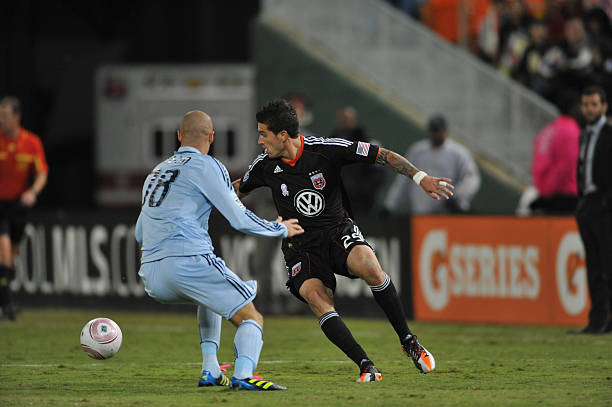
Different situations call for different solutions, and the defender’s position, available space and distance from goal should guide the decision.
| Match situation | Move to try | Main advantage |
|---|---|---|
| Defender stands square and balanced | Body feint | Creates a reaction through deceptive movement |
| Defender waits for you to commit | Scissors | Disguises your intended direction |
| Defender closes the space quickly | Inside-outside touch | Changes direction with minimal preparation |
| Defender commits to a tackle | Double touch | Exploits the defender’s forward momentum |
| Defender traps you near the touchline | Drag-back turn | Protects possession and opens a new route |
These are practical guidelines rather than fixed rules. A defender who leaves one side open presents a different opportunity from an opponent who backs away, blocks the route towards goal or receives support from a second defender.
Young players should also remember three common mistakes:
- Performing too many tricks: One convincing movement followed by acceleration often creates more danger than several unnecessary step-overs.
- Watching the ball for too long: Keep track of the ball during the technical action, then scan the space ahead and the positions of nearby opponents.
- Forcing the dribble: Beating a defender is useful when it creates an attacking advantage, while passing to a teammate can be the better choice when the route is blocked.
Coaches should encourage experimentation without treating every lost ball as a failure. Players improve by attempting skills against real opposition, recognising what went wrong and making better decisions during the next attempt.
READ ALSO | 10 Wall-Ball Drills to Dramatically Improve First Touch and Passing Accuracy
Final Thoughts
The best dribblers are rarely the players who perform the most tricks in a match. They are the ones who recognise a defender’s movement, select an appropriate response and execute it with enough conviction to create an advantage.
Master the body feint, scissors, inside-outside touch, double touch and drag-back turn, then practise them against opponents who are determined to stop you. Over time, young players learn when to change direction, when to accelerate and when to protect possession instead of forcing a move that has run out of space.
A defender can prepare for almost any trick. Making them guess at the right moment is a much harder problem.