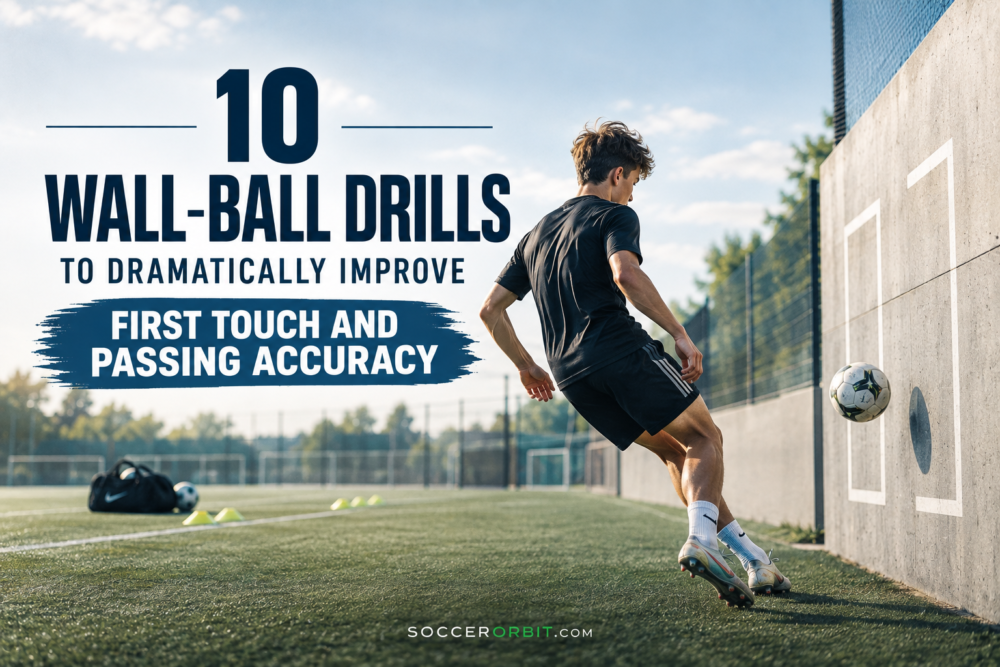
Soccer wall ball drills give you one of the simplest ways to improve first touch, passing accuracy, reaction speed and confidence because a solid wall can keep returning the ball when no teammate, coach or training session is available.
You need very little equipment, and the beauty of wall training comes from the number of meaningful touches you can collect in a short session, whether you are an U9 player learning the basics, a teenager chasing academy-level sharpness, or an adult trying to keep your technique reliable.
The wall also gives you immediate feedback, because a poor pass comes back at an awkward angle, a heavy first touch creates extra work, and a clean pass returns exactly where you expected it to return.
That makes wall training more than simple kicking against concrete, provided you give every repetition a purpose and gradually introduce the pressure, movement and decision-making that normally come from playing with teammates.
Why Wall Training Works So Well
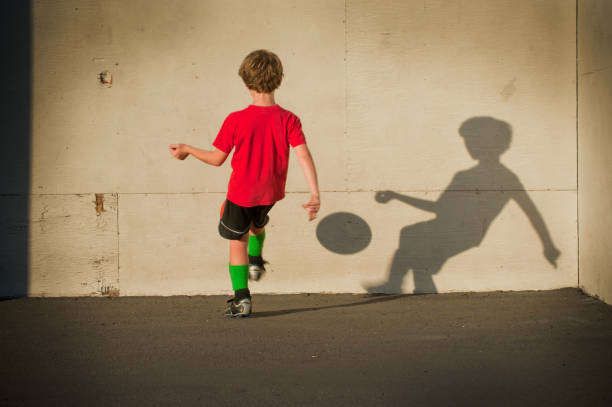
The best rebounding drills for soccer create a continuous cycle of passing, receiving, adjusting your body and preparing for the next action, which means you can accumulate hundreds of technically useful repetitions without waiting for another player.
The FA specifically includes wall work as an alternative to partner passing and recommends progressions such as increasing distance, using the other foot, narrowing targets and attempting one-touch passes through gates.
For younger players, the priority should be clean technique and control rather than trying to smash every pass as hard as possible, while older and more experienced players can gradually increase speed, distance and difficulty.
A useful starting point is roughly five to seven yards from the wall for beginners, while more advanced players can move farther away when their technique remains reliable at higher passing speeds.
1. Two-Touch Inside-Foot Passing
Start six to eight yards from a sturdy wall and pass the ball firmly toward a small target area, then cushion the returning ball with one foot before using the same foot to play it back.
Your receiving foot should soften slightly on contact rather than remaining rigid, because the purpose of the first touch is to take the pace out of the ball while keeping it close enough for your next pass.
Complete several repetitions with your right foot before switching to your left, then increase the passing speed once you can consistently control the rebound without needing to chase the ball.
For younger players, begin closer to the wall and use softer passes, while older players should gradually move farther away and demand a cleaner first touch from a faster rebound.
READ ALSO | Can American Youth Players Join European Academies: FIFA Rule 19
2. Receive With One Foot, Pass With the Other
This progression introduces a simple habit that becomes valuable during matches, because receiving across your body can open your next passing angle while preventing you from becoming dependent on one foot.
Pass with your right foot, receive with your left, move the ball slightly across your body, and then return it with your right foot before repeating the sequence in the opposite direction.
Keep your body slightly side-on instead of standing square to the wall, because that position makes it easier to receive across your body and prepare for another action.
This drill appears in established wall-training progressions because alternating the receiving and passing feet forces greater coordination while encouraging players to control the ball into a useful position rather than simply stopping it.
3. One-Touch Wall Passing
One-touch passing changes the rhythm completely because you no longer have the luxury of stopping the ball, deciding what to do and then making your next pass.
Stand close enough to the wall that the ball returns quickly, then play every rebound directly back using the inside of your foot while concentrating on clean contact and accurate direction.
Begin with your stronger foot, switch to your weaker foot, and eventually alternate feet after every pass so your body learns to adjust quickly instead of waiting for the ball to arrive perfectly.
The FA also uses one-touch wall passing as a progression, while coaching resources commonly recommend reducing the distance for faster repetitions and increasing the distance when you want a more realistic passing range.
4. First Touch Into Space
This is where wall training starts becoming much closer to football, because your first touch should prepare your next action rather than merely bring the ball under control.
Place two cones or markers several feet apart in front of you, pass the ball into the wall, and use your first touch to guide the rebound toward one side before passing it back.
Alternate between taking the ball to your right and left, then begin deciding the direction before the ball arrives so you develop the habit of preparing your body early.
A controlled first touch should move the ball into useful space, and current coaching guidance also recommends progressing wall first-touch exercises by directing the rebound left, right or forward instead of always killing the ball directly underneath you.
5. Outside-Foot Receive and Return
The outside of your foot gives you another receiving surface and helps develop the type of touch required when the ball arrives from awkward angles during a match.
Pass the ball against the wall with your right foot, receive it with the outside of that same foot, allow the ball to move slightly away from your body, and then use the inside of your foot to return the pass.
Repeat the sequence on both sides while keeping your touches controlled enough that the ball remains within your next step rather than rolling several yards away.
Once comfortable, increase the speed of the wall pass and reduce the space available for your first touch, which forces you to absorb the rebound while maintaining balance and preparing your next movement.
READ ALSO | How to Make a College Soccer Highlight Video That Coaches Will Actually Watch
6. Sole Roll, Step and Pass
The sole roll introduces movement between receiving and passing, which makes this one of the better solo wall drills for players who want their technique to feel less stationary.
Receive the ball with the sole of your foot, roll it across your body, take several controlled steps around it, and then pass toward the wall with the opposite foot.
The extra movement matters because match football rarely gives you a stationary ball sitting perfectly beneath your body, and learning to receive, move and release helps connect technical work with realistic movement.
Some wall-training progressions deliberately add several steps between the first touch and the next pass, allowing players to practice both short and longer passing actions while also creating opportunities to lift their heads and scan.
7. Wall Passing Through a Gate
Place two cones approximately one yard apart against the wall to create a target gate, then challenge yourself to send every pass through that space before controlling the returning ball.
Your first goal should be accuracy rather than speed, because consistently hitting a small target teaches you to control the direction and weight of your pass rather than simply striking the ball toward the wall.
After you can complete a reliable sequence, narrow the gate, increase your distance from the wall, or attempt one-touch passes through the target without allowing the ball to drift outside the area.
The FA recommends gates as a way to make passing accuracy measurable, with progressions involving smaller targets, multiple gates and one-touch passing.
8. Two-Touch Across the Body
Stand slightly to one side of the wall and play the ball so that your first touch takes it across your body before your second touch sends it back.
This movement teaches you to receive with your back foot and move the ball away from the imaginary pressure that would normally come from an opponent approaching directly from the front.
Use both feet and alternate the direction of your first touch, because developing only one comfortable receiving pattern can leave you predictable and restricted when the game becomes faster.
As your control improves, shorten the distance between the wall and your body so the rebound arrives sooner, forcing your first touch and second pass to happen with less time available.
READ ALSO | The Truth About College Soccer Scholarships: How Many Are Available?
9. Random Direction First Touch
For this drill, place three small targets around your training area and decide where you want the ball to go before the rebound reaches you, creating a simple decision-making element within your solo session.
Pass into the wall, receive the rebound toward the selected target, recover the ball and immediately play another pass before choosing a different direction for the next repetition.
You can make the exercise harder by changing your target at the last possible moment, although the priority should remain controlled movement rather than frantic touches that destroy your technique.
This type of progression matters because good first touch involves more than stopping the ball, with effective players regularly controlling their first touch into space that supports their next decision.
10. The Wall-Ball Pressure Test
Finish your session with a timed challenge that combines everything you have worked on, including two-touch passing, one-touch passing, weak-foot repetitions, directional first touches and target accuracy.
Give yourself three minutes and count only clean passes that remain inside your chosen target area, then repeat the challenge with your weaker foot and compare the quality rather than simply chasing a higher number.
You can also introduce a mistake system where a missed target, poor first touch or ball that escapes your training area costs one point, giving your practice a little pressure without turning the session into mindless repetition.
The FA uses timed wall-passing challenges where players count successful passes and attempt to beat previous scores, making this an easy way to measure improvement over several weeks.
READ ALSO | How Guest Playing Works in Youth Soccer: Rules, Permits, and Strategy
How To Practice Soccer Against a Wall Properly
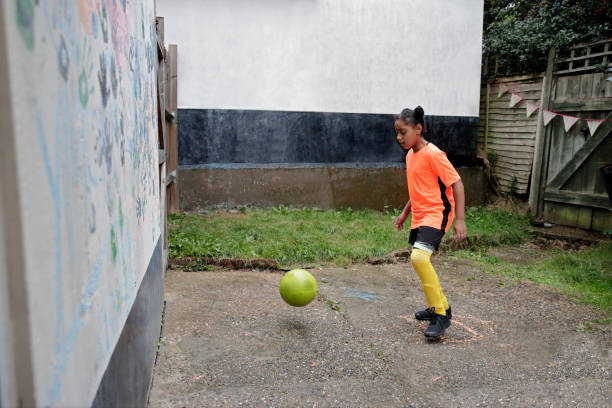
The biggest mistake with wall training is treating every repetition as a race, because hitting the ball harder can create the illusion of intensity while allowing poor body position, loose touches and inaccurate passing to become habits.
Start at a manageable distance, establish clean technique, then increase speed, distance and pressure only when you can maintain control, which follows the broader principle of progressing solo training from simple repetitions toward more demanding situations.
Keep your supporting foot pointed toward your intended target, open your body when receiving across yourself, stay light on your feet and try to prepare before the ball reaches you rather than reacting after the bounce.
Most importantly, use both feet, because a wall gives you an unusually convenient opportunity to train your weaker side without needing a teammate to cooperate with the exercise.
A Simple 20-minute Wall Session
For a short session, spend four minutes on two-touch inside-foot passing, followed by four minutes of alternating-foot passing, then four minutes working on directional first touches before moving into four minutes of one-touch passing.
Use the final four minutes for the pressure test, recording your successful passes and repeating the same challenge during future sessions so you can see whether your accuracy and speed are actually improving.
For U9 and younger players, reduce the distance and keep the exercises playful, while U10 to U13 players can begin adding weaker-foot work and simple target challenges without making the session overly complicated.
Teenagers and adults can increase the speed, distance, movement and decision-making demands, particularly when preparing for competitive football where the ball often arrives faster and the available time becomes much smaller. Players who prefer a shorter, structured routine can also build their technical work around a focused at-home ball mastery session that fits easily into a busy training schedule
Details That Make Wall Training Work
A wall cannot replace teammates, defenders, small-sided games or realistic tactical training, but it can give you something every player needs more of, which is technically clean repetition performed consistently over time.
The most useful soccer wall ball drills therefore have a clear purpose, whether you are improving the weight of your pass, receiving across your body, preparing your next touch or learning to use your weaker foot.
If you have twenty minutes and a safe wall, you have enough equipment to work on skills that appear repeatedly in every match, provided you train with intent and make the exercises progressively harder.
The wall will keep giving the ball back, but what you do with that next touch is where the improvement happens.