

At soccer tryouts, scoring a goal can win a player a few admirers, but the decision to offer a place on the team often depends on what happens before the shot, after the pass and during the five minutes when the ball barely comes near them. Coaches are watching the entire player, including the decisions that never make a highlight reel.
For parents and ambitious young footballers, this can make the selection process feel confusing, particularly when a player scores twice during a trial and still fails to make the squad, while another spends the session making simple passes and walks away with an offer.
The explanation usually begins with the coach’s evaluator sheet, whether that means a formal scoring document, a set of notes on a clipboard or an assessment framework carried around in the coach’s head. Each club has its own methods, but the underlying questions tend to revolve around technical ability, tactical understanding, physical readiness, decision-making and behaviour.
Understanding those questions changes how players prepare for tryouts, because the objective is no longer to perform a collection of impressive tricks. It is to show a coach how useful, adaptable and reliable that player could become within a team.
1. Technical Ability
The first question on many soccer coach tryout evaluation sheets concerns a player’s technical ability, but the useful distinction is between someone who can perform a skill in an empty training ground and someone who can execute it while an opponent is closing in.
A coach will usually pay close attention to five areas:
- First touch: Does the player control the ball into useful space, or does the next action become an emergency rescue? A soft, well-directed first touch gives the player more time to assess their options and respond to pressure, which is why consistent practice with soft cushion receiving can make such a difference during tryouts.
- Passing: Can they deliver the right pass with suitable weight, timing and accuracy, using either foot when necessary?
- Dribbling: Can they beat an opponent when the situation calls for it, while recognising when keeping possession is the smarter choice?
- Shooting and finishing: Do they strike the ball cleanly, choose sensible targets and recognise when a teammate has a better opportunity?
- Ball control under pressure: Can they protect possession, turn away from danger and execute their next action without panicking?
Research published in PLOS ONE by Paul Larkin and Donna O’Connor examined how 20 Australian youth coaches and technical directors assessed players entering representative football at Under-13 level. First touch, striking, one-versus-one ability, technical execution under pressure, decision-making and coachability featured prominently in their findings.
Consider two midfielders receiving the ball with an opponent approaching from behind. One controls it beautifully but immediately passes backwards without checking the field; the other scans before receiving, takes a touch away from pressure and finds a forward passing lane.
Both have technical ability, but the second player demonstrates how technique can serve the team’s wider purpose, which is precisely what a coach wants to see during a competitive trial.
2. Tactical Intelligence
This is where tryouts become more revealing than a collection of shooting and dribbling drills, because tactical intelligence appears in the spaces players occupy, the options they recognise and the decisions they make before the ball reaches them.
Coaches assess whether a player understands when to press, when to hold their position, when to support a teammate and when to move into space that opens a passing lane for somebody else.
They also watch what happens away from the ball. A winger who repeatedly makes well-timed runs behind the defence may create several dangerous situations without receiving a single pass, while a defender who adjusts their position early can prevent an attack before it becomes a problem.
FIFA’s talent-identification guidance explains that clubs should build player profiles around their preferred playing style, assessing technical, tactical, physical, psychological and social qualities rather than relying on one isolated measure of ability.
For a player, the practical lesson is simple: make decisions that fit the game, rather than trying to make every action look impressive. A centre-back who plays a simple pass to an unmarked midfielder may be making the best decision available, even if a more ambitious pass would attract attention from the touchline.
3. Decision-Making
Decision-making deserves its own place on the evaluator sheet because technical quality means little if a player repeatedly chooses the wrong action at the wrong moment.
A coach may assess whether a player scans their surroundings before receiving, recognises when to release the ball, understands the risks of carrying possession and reacts sensibly when the original plan disappears.
Imagine a forward receiving the ball near the penalty area with two defenders closing in. Forcing a shot through both defenders may look ambitious, but laying the ball off to an unmarked teammate could produce a much better chance.
The coach is evaluating the player’s ability to read that situation, choose an appropriate response and execute it quickly enough to matter.
A useful way to improve is to review decisions after training rather than judging every action by its outcome. A well-chosen pass can be intercepted because of poor execution, while a reckless pass can succeed through luck, and coaches who understand the game learn to separate the two.
4. Work Rate and Physical Ability
Speed, strength, acceleration, balance, agility and stamina all influence how a player performs, although their importance depends on the position, age group and level of competition.
A full-back may need recovery speed to deal with counterattacks, while a central midfielder benefits from mobility, repeated efforts and the ability to maintain concentration late in a session. Goalkeepers face different physical demands, including explosive movement, jumping, positioning and the confidence to deal with aerial balls.
However, coaches also assess work rate, which is more than running around until exhaustion arrives. They notice whether a player tracks an opponent after losing possession, offers support after passing, presses at the right moment and continues competing when the session becomes tiring. Players can also develop their fitness and technical consistency outside team training by working on simple individual exercises that require little space and no specialist equipment.
U.S. Soccer’s talent-identification approach identifies six connected qualities: physical execution, game understanding and decision-making, technical execution, responsibility and initiative, growth mindset and winning mentality, and learning ability.
That framework offers a useful reminder for young players: physical tools matter, but coaches also need to see those tools used intelligently within the game.
There is another complication, especially in youth football. Players mature at different rates, meaning an early-developing teenager may currently be faster and stronger than a teammate who eventually becomes the better footballer. A fair assessment should consider age, maturation, position and development potential rather than treating present physical superiority as a reliable forecast of future ability.
5. Coachability
A tryout gives coaches a brief look at a player, so the way someone responds to instruction can influence how they interpret everything else they observe.
Suppose a coach asks a winger to stay wider, receive the ball facing forward and attack the space behind the opposing full-back. The winger attempts the adjustment during the next few repetitions, even if the execution remains imperfect, and the coach has evidence that the player can listen, adapt and apply feedback.
Compare that with a player who ignores the instruction, repeats the same mistake and blames teammates whenever an attack breaks down. The second player may possess better technical skills, but their behaviour raises questions about how effectively they will develop within the squad.
Coachability also appears after mistakes, difficult decisions and substitutions during practice games. Players who remain attentive, ask sensible questions and make an honest effort to improve give coaches more reason to invest time in their development.
6. Attitude, Communication and Character
Coaches observe how players behave when they have the ball, but their reactions when somebody else has it can be equally revealing.
Does a player encourage a teammate after a misplaced pass, communicate before a defender receives under pressure and accept responsibility after making an error? Or do they complain, point fingers and become visibly disengaged whenever the game moves away from them?
These behaviours help a coach judge whether a player can function within a group, particularly when competition for places becomes uncomfortable.
Communication also needs to be understood in context. A goalkeeper organising the defensive line, a centre-back warning a teammate about an approaching opponent and a midfielder asking for the ball all communicate differently, yet each can help the team operate more effectively.
Players do not need to become the loudest person on the pitch to impress. They need to show awareness, responsibility and a willingness to contribute when the team needs them.
READ ALSO | How to Write an Email to a College Soccer Coach With (Copy-Paste Templates)
Inside a Coach’s Evaluator Sheet: How Soccer Tryouts Are Graded
There is no universal scoring sheet used by every soccer club, and a grassroots team selecting players for development will not necessarily assess them in the same way as a professional academy or college programme.
The following is an illustrative soccer player rating scale, designed around commonly assessed qualities and established talent-identification principles. It is not an official FIFA, U.S. Soccer or club grading system.
Sample Player Evaluation Sheet
1. Technical Ability
What the coach observes: First touch, passing, dribbling and execution under pressure.
2. Tactical Awareness
What the coach observes: Positioning, movement, pressing and defensive responsibilities.
3. Decision-Making
What the coach observes: Scanning, speed of thought and choice of action.
4. Physical Ability
What the coach observes: Acceleration, agility, balance and repeated efforts.
5. Work Rate
What the coach observes: Recovery runs, support play and response after losing possession.
6. Coachability
What the coach observes: Listening, applying feedback and adapting to instructions.
7. Teamwork
What the coach observes: Communication, responsibility and support for teammates.
Understanding the Soccer Player Rating Scale
A coach might use a five-point scale to record observations, although individual clubs may use different systems.
- 1/5: Needs considerable development. The skill is rarely demonstrated successfully in the situations observed.
- 2/5: Developing. The player shows the skill occasionally but struggles with consistency or pressure.
- 3/5: Competent. The player meets the expected standard in many situations.
- 4/5: Strong. The player performs consistently well and handles demanding situations effectively.
- 5/5: Outstanding for the level. The player frequently demonstrates a high standard against the relevant age-group and team requirements.
A coach might add notes such as “scans before receiving”, “slow to recover after turnovers” or “responds well to positional instructions”, giving the staff something concrete to discuss when comparing candidates.
The ratings should also reflect the player’s position and the team’s needs, since a centre-back and a striker can offer very different strengths without either being the better overall footballer.
A Step-by-Step Guide to Preparing for Soccer Tryouts
Understanding the evaluator sheet is useful, but the next challenge is turning that knowledge into actions coaches can recognise on the pitch.
Step 1: Find Out What the Team Needs
Research the club’s level, playing philosophy and likely positional requirements, then identify the qualities that would help you fit into that environment.
Step 2: Practise Receiving Under Pressure
Work on your first touch, scanning before the ball arrives, receiving on different feet and playing forward when the opportunity is available.
Step 3: Train in Realistic Game Situations
Small-sided games help you practise quick decisions, movement, pressing and passing under pressure more effectively than repeating isolated tricks alone.
Step 4: Build Position-Specific Habits
Defenders should practise positioning and recovery runs, midfielders should work on scanning and connecting play, while forwards should develop movement, finishing and pressing.
Step 5: Show Your Work Without the Ball
Recover after turnovers, support teammates after releasing possession and stay involved when the ball moves to the opposite side.
Step 6: Respond to Coaching Immediately
Listen carefully, apply instructions during the next opportunity and remain composed when an adjustment takes time to work.
Step 7: Review the Session Honestly
Identify two strengths and two areas for improvement, then use them to shape your next training session rather than obsessing over every mistake.
What Gets You Cut at Soccer Tryouts?
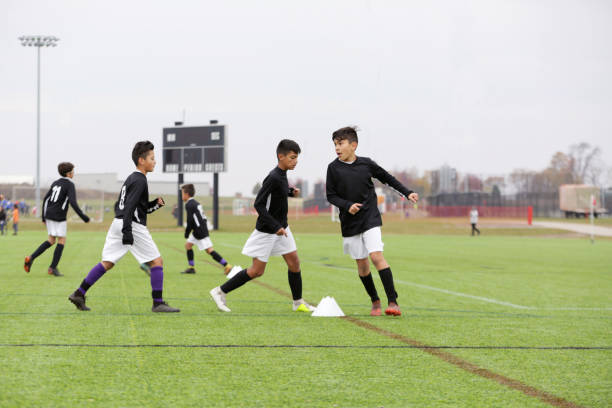
Players can miss selection for several reasons, and not all of them mean they lack the ability to play at a competitive level.
Repeated technical errors under pressure, poor positional awareness, limited defensive effort, slow decision-making and an inability to apply feedback can all weaken a player’s chances. Persistent negative behaviour may also raise concerns about how they will contribute to the group.
Many of these areas can be addressed before assessment day, which is why preparing physically, sharpening technical skills and developing the right mindset can help players approach tryouts with greater confidence.
Sometimes, however, a player performs reasonably well and still misses out because the squad already has several players in that position, the team needs a different skill set or the coach believes another candidate is better suited to the current level.
That is why rejection should prompt useful questions rather than immediate conclusions about talent. Ask for specific feedback, identify the areas that can be improved and consider whether another team might provide a better environment for development.
READ ALSO | How College Soccer Recruiting Works: A Year-by-Year Roadmap
Real Secret Behind a Successful Tryout
A soccer coach evaluates more than the player who scores the most goals or completes the most impressive dribbles, because selection involves judging how technical skill, tactical understanding, physical ability and behaviour combine to help a team function.
The strongest approach is to play with purpose, make sensible decisions, remain active away from the ball and show that you can learn when challenged. Parents can help by encouraging consistent training and asking about development rather than judging every trial by its outcome.
A coach may remember the goal that wins a practice match, but the decision to select a player often grows from dozens of smaller moments that reveal how that player thinks, competes and responds to the game.