

Talking to a soccer coach about playing time can be one of the most uncomfortable conversations in youth football, particularly when you have spent your weekends driving to training, paying club fees and watching your child wait on the touchline while other players get their chance.
The difficult part comes when you have to separate what you feel as a parent from what your child needs as a young footballer, because a conversation that starts with a reasonable question can quickly become an argument about selection, effort, fairness or whose child deserves to start.
There is a better way to handle it, and it begins with understanding that asking why your child is not playing more minutes is perfectly reasonable. The challenge lies in asking a question that invites an honest answer rather than putting a coach on the defensive.
Youth soccer organisations and sports-development experts consistently emphasise communication, age-appropriate development and positive relationships between parents and coaches. U.S. Soccer’s player-development approach, for example, places the individual child, their learning environment and their experience of the game at the centre of coaching.
The goal of the conversation should be to understand your child’s development and identify what comes next, rather than simply secure more minutes in the next match.
1. Understand What Is Bothering Your Child
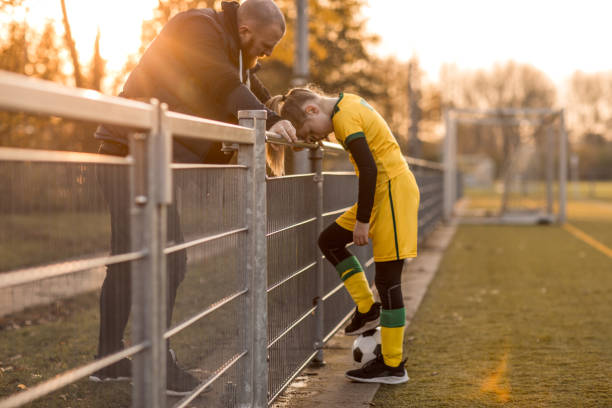
Before contacting the coach, have a conversation with your child first, this goes beyond asking whether they are happy with their playing time, because children sometimes experience the same situation very differently from their parents.
Your child might be frustrated about sitting on the bench, worried that the coach has lost confidence in them, embarrassed about being substituted early or perfectly content with their role while you are the one counting minutes from the sideline.
Ask open questions such as, “How are you feeling about football at the moment?” or “Is there anything about matches that you wish was going differently?” Then give your child enough space to answer without steering the conversation towards your own suspicions.
If they are upset, listen before offering solutions. If they are not particularly bothered, consider whether a confrontation would solve a problem they have not actually identified.
The American Academy of Pediatrics highlights the value of positive parental support, enjoyment and development in organised sport, while warning that unhealthy attitudes from adults can undermine a child’s experience.
That does not mean parents should ignore genuine concerns, but it does mean the child’s needs should remain at the centre of the discussion.
READ ALSO | How College Soccer Recruiting Works: A Year-by-Year Roadmap
2. Follow the 24-Hour Rule Before Contacting the Coach
A player gets five minutes in a match they expected to start, the final whistle goes, and suddenly the journey home feels considerably longer than the journey to the ground.
This is usually a poor moment to discuss selection, because disappointment can turn a fair question into an accusation before either person has had time to consider the situation properly.
The 24-hour rule in youth sports recommends waiting roughly a day after a game before raising an emotionally charged concern, giving parents and coaches time to cool down and approach the discussion with clearer heads. Positive Coaching Alliance recommend cooling-off periods as part of constructive parent-coach communication.
Taking a step back can also help parents keep individual selection decisions in perspective, particularly when weighing their child’s long-term development and the opportunities available through different pathways, including European academies.
Use that time to write down what you actually want to understand, rather than preparing a list of decisions you believe the coach got wrong.
There are exceptions, of course. Concerns involving a child’s safety, abusive behaviour or serious misconduct should be addressed promptly through the appropriate channels, rather than left unattended because a general cooling-off guideline says to wait.
3. Ask for a Private Conversation
The car park after a match is a poor substitute for a meeting room, especially when other parents are standing nearby and the coach has players to speak to, equipment to collect or another fixture to prepare for.
Send a brief message asking for a convenient time to talk, and make it clear that you want to understand your child’s development rather than challenge the coach’s authority.
Parent-Coach Communication Template
Hi Coach, hope you’re well. I’d appreciate a few minutes to talk about how [Child’s Name] is progressing and what they need to work on to earn more playing time. I’d like to understand your expectations and how we can support their development. Please let me know when would be convenient for you. Thanks.
This message works because it identifies the concern without assuming that the coach has acted unfairly, while also giving them an opportunity to prepare useful feedback.
The key is to approach the coach with questions about improvement rather than accusations about selection, recognising that coaches are balancing the needs of an entire squad rather than watching one child alone.
That difference matters, particularly in competitive club football, where selection decisions can involve tactical roles, training performance, squad balance and the demands of a particular opponent.
4. Ask the Question That Gets You an Actual Answer
If you want to know how a parent should ask a youth soccer coach why their child is not playing, begin with curiosity rather than comparison.
“Why does my child never get to play?” can sound like a demand for justification, while “What are you looking for from my child before you can trust them with more minutes?” opens the door to a more practical conversation.
Here are four questions worth asking during the meeting:
- “What are you seeing in training and matches that is affecting their playing time?” This invites specific feedback about technical ability, tactical understanding, fitness, decision-making, attitude or consistency.
- “What are the two or three areas they should prioritise improving?” A focused answer gives your child something concrete to work on instead of leaving them guessing about what the coach wants.
- “Are they competing for a particular position, or do you see another role that might suit them better?” Sometimes a player is developing well but faces strong competition in one position, while another role could offer a better route into the team.
- “When could we review their progress?” Agreeing to revisit the discussion after several weeks of training creates a useful checkpoint without demanding a promise of minutes.
Listen carefully to the answers, even when they are uncomfortable to hear. If the coach identifies a weakness in defensive positioning or the speed of decision-making, ask what that looks like in practice and what improvement would look like during a match.
You can disagree with a coach’s assessment, but you will struggle to help your child improve if the conversation never gets beyond whether the selection decision felt fair.
5. Understand the Difference Between Developmental and Competitive Soccer
One reason youth soccer playing time issues become so heated is that parents sometimes assume every team operates under the same expectations, when recreational football, development-focused academies and competitive travel teams can have very different selection policies.
For younger children, participation, confidence and opportunities to learn deserve particular attention. The American Academy of Pediatrics notes that equal playing time can help support participation among children aged 12 and younger, although actual expectations depend on the programme and competition.
Older players in highly competitive environments may face selection decisions based on tactical requirements, current performance, training attendance, fitness and the coach’s assessment of readiness.
Neither approach excuses poor communication, and parents should never assume that paying club fees automatically guarantees a starting place or a particular number of minutes.
Instead, ask the club to explain its playing-time policy, including whether it changes by age group, competition or stage of the season. Check the written handbook as well, because the club’s published rules provide a firmer basis for discussion than assumptions gathered from other parents.
The useful question is whether the coach’s decisions fit the programme’s stated philosophy and whether your child understands what is expected of them.
6. Avoid These Five Mistakes During the Conversation
Even a well-intentioned parent can undermine a reasonable concern by choosing the wrong words or allowing frustration to take control.
Comparing Your Child With Teammates
Avoid saying, “My child is better than the player you keep starting.” Ask instead what the coach values in that position and which qualities your child needs to develop.
Using Club Fees as Leverage
The financial commitment may be substantial, especially when travel, equipment and tournament costs accumulate, but paying for a place in the programme does not automatically purchase selection.
Speaking for Your Child Indefinitely
If your child is old enough to communicate comfortably, encourage them to ask the coach for feedback themselves, with you available to support them when needed.
Recruiting Other Parents Into the Dispute
Complaining in group chats or organising a touchline campaign can turn an individual concern into a team-wide conflict before anyone has established what is happening.
Demanding an Immediate Guarantee
A coach who promises a starting place to end an uncomfortable conversation has offered reassurance, not necessarily a development plan. Ask for clear expectations and a date to review progress instead.
These principles align with Positive Coaching Alliance guidance, which encourages parents and coaches to establish clear expectations, communicate respectfully and focus discussions on the player’s development.
7. Turn the Conversation Into a Development Plan
A productive meeting should leave your child with something more useful than the promise that the coach will keep an eye on them.
Suppose the coach explains that your child loses possession too often under pressure and struggles to recover their defensive position after an attacking move. Those observations can become practical training targets rather than vague criticisms about being insufficiently ready for the team.
Agree on two or three priorities, discuss how the player can practise them, and ask the coach what progress would look like in training and matches.
You might agree to review the situation in three or four weeks, depending on the fixture schedule and the child’s circumstances. That timeframe is a practical suggestion, not a universal coaching standard, and improvement should not be treated as an automatic guarantee of selection.
U.S. Soccer’s coaching guidance emphasises age-appropriate learning, individual development and helping players take ownership of their progress, all of which support this kind of approach.
After the meeting, speak with your child about the feedback without turning every training session into an examination. Ask what they want to work on, encourage consistent effort and allow them to enjoy football without feeling that every touch is being assessed at home.
READ ALSO | 10 Wall-Ball Drills to Dramatically Improve First Touch and Passing Accuracy
What If the Coach Refuses to Explain?

Most playing-time disagreements can be improved through a calm conversation, but parents should recognise when communication has broken down or when a concern involves something more serious than selection.
If the coach repeatedly avoids reasonable requests for feedback, contradicts the club’s written policies or treats your child unfairly in ways that go beyond ordinary sporting decisions, document specific incidents and approach the club’s director of coaching or designated complaints contact.
Keep your account factual, including dates, what happened, what was said and any attempts you made to resolve the concern. Avoid turning suspicion into an allegation without evidence, and use the club’s formal process if informal conversations have failed.
Safety concerns, bullying, discriminatory treatment or abusive conduct deserve particular attention and should be reported through appropriate safeguarding channels without waiting for a routine playing-time review.
Parents have every right to expect a safe environment, respectful treatment and clear communication, even when they cannot agree with a coach’s tactical decisions.
The Conversation Worth Having
The hardest part of watching your child sit on the bench is resisting the urge to make their disappointment your own, particularly when you can see their ability, remember their best performances and wonder why the coach appears to see something different.
But the most useful conversation rarely begins with a demand for more minutes. It begins with a willingness to understand what the coach sees, what your child wants and what both adults can do to help them improve.
Ask the questions, listen to the answers, agree on practical next steps and give the process enough time to produce meaningful evidence.
Your child may earn more minutes, move into a different role or discover that their current team offers fewer opportunities than they need. Any of those outcomes is easier to navigate when the adults communicate openly. For families considering a change of club, it is also worth weighing the financial commitment involved, since the cost of travel soccer can vary considerably depending on the team, competition level and travel schedule.
The real win is making sure your child leaves the conversation knowing what they can work on, feeling supported at home and still wanting the ball at their feet when the next training session begins.