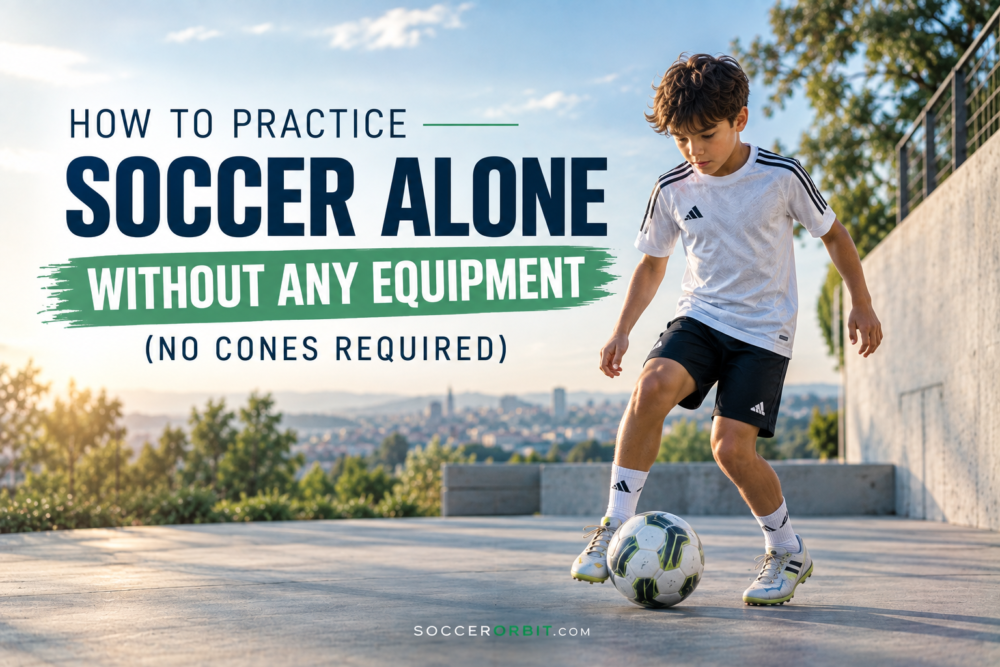
Soccer drills without equipment can give you a surprisingly serious workout when all you have is a ball, a patch of grass, and enough stubbornness to keep practising after the first few mistakes, making solo soccer training with no gear far more useful than many beginners assume.
You do not need an agility ladder, a bag of cones, training poles, hurdles or a garage full of fancy equipment to become more comfortable with the ball, because the most important object in your session is already sitting at your feet. FIFA’s youth coaching guidance repeatedly places ball mastery, repetition, close control and progressive practice at the centre of technical development, particularly for younger players.
The trick is to make your practice purposeful rather than spending 30 minutes aimlessly kicking the ball around, because zero equipment soccer footwork works best when every exercise has a clear technical target and becomes gradually harder.
What You Can Improve With Only A Ball
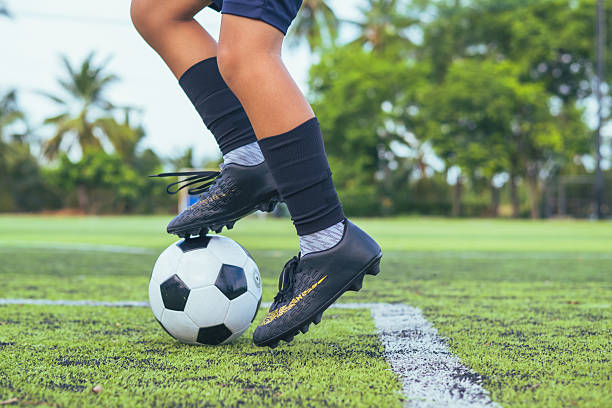
When you train alone, you have an obvious limitation because you cannot recreate the pressure of a defender, the movement of teammates or the unpredictability of a competitive match, but you can build the technical foundation that allows those situations to become easier later.
FIFA’s coaching material describes ball mastery as a foundation for dribbling, receiving, turning and protecting possession, while also encouraging players to use different surfaces of both feet and develop confidence through repeated contact with the ball.
That gives you several areas to work on during individual soccer practice at home or outside, including first touch, close control, changes of direction, dribbling, turns, weak-foot confidence, coordination, ball manipulation and the ability to carry the ball at different speeds.
You can also introduce small tactical habits into a solo session, particularly scanning before receiving or changing direction, because FIFA’s recent youth work continues to emphasise gathering information and making decisions before and after actions rather than treating technique as something completely separate from the game.
A simple 35-minute solo soccer session
The following routine is designed for a beginner or intermediate player who has one football and enough safe space to move freely, with every exercise requiring nothing more than your body and the ball.
Step 1: Get comfortable with the ball for five minutes
Start by moving slowly around your space while keeping the ball close enough that you can touch it every few steps, using the inside, outside and sole of each foot rather than relying on your dominant side.
After two minutes, begin alternating touches between your feet, then introduce sole rolls from left to right, inside-foot cuts, outside-foot touches and gentle drag-backs while keeping your head occasionally lifted to look around.
The objective here is control rather than speed, because FIFA’s grassroots guidance places heavy emphasis on giving young players plenty of touches and using repetition to build confidence and more instinctive ball control.
Step 2: Build zero equipment soccer footwork for eight minutes
Stand with the ball close to you and perform toe taps, foundations, inside-inside touches, outside-outside touches, sole rolls and V-pulls, changing the rhythm every 20 to 30 seconds while maintaining control.
Once those movements feel comfortable, connect two actions together, such as a sole roll followed by an inside touch or a V-pull followed by an outside-foot push, because combining simple movements begins to resemble the adjustments you make while escaping pressure.
Do not chase speed before your technique is clean, since FIFA’s guidance for young players specifically recommends prioritising quality and accuracy before increasing the pace of technical actions.
A useful progression is to complete each movement slowly first, increase the tempo while maintaining control, and then perform the same sequence with your weaker foot receiving most of the work.
Step 3: Turn an empty space into a dribbling course
You do not need cones to create a dribbling course because you can choose imaginary points around your space and treat them as defenders, gates or changes of direction that you must recognise while carrying the ball.
Dribble forward for several metres, perform a sharp cut with the inside of your foot, accelerate away, slow down again, perform a drag-back and then change direction with the outside of your opposite foot.
The important part is the change of speed after the move, because beating a defender usually involves creating separation after the touch rather than performing a spectacular trick that leaves you standing in exactly the same place.
The FA’s coaching guidance also connects ball mastery with travelling, turning, shielding and staying on the ball, which gives you a useful reminder that technical work should eventually lead towards actions that solve football problems.
Try the same route three times with your stronger foot controlling most actions, then repeat it while deliberately using your weaker foot whenever possible.
Step 4: Practise first touch without a partner
First touch becomes much easier to understand when you stop thinking of it as simply stopping the ball and start thinking about where you want the next action to happen.
If you have a safe wall nearby, pass the ball against it and receive it with different surfaces, directing your first touch slightly left, right, forward and across your body before playing the next pass.
If you have no suitable wall, lift the ball gently into the air and control it with your instep, thigh or chest before allowing it to bounce and moving into the next touch, with the emphasis remaining on taking the ball into useful space.
FIFA’s coaching material recommends progressing from basic ball control towards passing and receiving, while its recent youth sessions continue to connect receiving technique with scanning, movement and decision-making.
For an extra challenge, look away briefly before the ball arrives and then regain visual contact just before your first touch, which helps introduce a small version of the scanning habit you need during matches.
Step 5: Work on turns for five minutes
Turns are particularly useful during soccer drills without equipment because you can practise them almost anywhere, and they teach you to change direction while keeping the ball close enough to protect it.
Begin with the inside cut, outside cut, sole drag-back, Cruyff turn and simple pull-push movement, performing each action slowly until the ball stays under your control throughout the movement.
Then add acceleration immediately after every turn, because the purpose of a turn in a match is usually to escape pressure, attack available space or change the direction of play rather than perform the movement for its own sake.
FIFA’s technical guidance highlights close control, body movement, feints, changes of direction and recognising available space as important components of effective ball mastery.
You can make the exercise harder by imagining a defender approaching from behind and choosing a turn that would allow you to protect the ball from that particular direction.
Step 6: Train both feet instead of hiding behind your favourite one
Your dominant foot will naturally feel more comfortable, so solo practice gives you a useful opportunity to remove that comfort and make your weaker side work much harder than it normally would during casual play.
Spend several minutes dribbling with your weaker foot only, then complete your turns with that foot and use it for every pass when a wall is available, even when the movement feels slower or less natural.
The FA’s ball mastery guidance encourages young players to manipulate the ball in different directions, speeds and with different parts of the foot, which supports the broader principle of becoming comfortable with more than one technical solution.
You do not need to make every session perfectly balanced, but regularly giving your weaker foot deliberate responsibility can gradually make it a useful football tool rather than the foot you use when your stronger one has nowhere left to go.
Step 7: Add a little pressure to your own practice
Training alone cannot reproduce an actual defender, but you can make your exercises more demanding by giving yourself rules that force quicker decisions and cleaner execution.
For example, give yourself three seconds to perform a turn after changing direction, require five consecutive touches with your weaker foot, or challenge yourself to complete a particular sequence without losing the ball.
You can also create imaginary defenders by choosing a direction before beginning a dribble and then reacting to a random decision you make during the movement, forcing yourself to change speed, direction or foot rather than following the same predictable pattern.
FIFA’s recent coaching work places increasing emphasis on game-like situations and decision-making, with technical actions becoming more useful when players learn to apply them in changing situations rather than repeating movements mechanically.
That distinction matters because a player can become very good at performing a step-over in an empty garden while still struggling to recognise when a step-over actually helps against a defender.
READ ALSO | How College Soccer Recruiting Works: A Year-by-Year Roadmap
What To Do When You Only Have A Ball
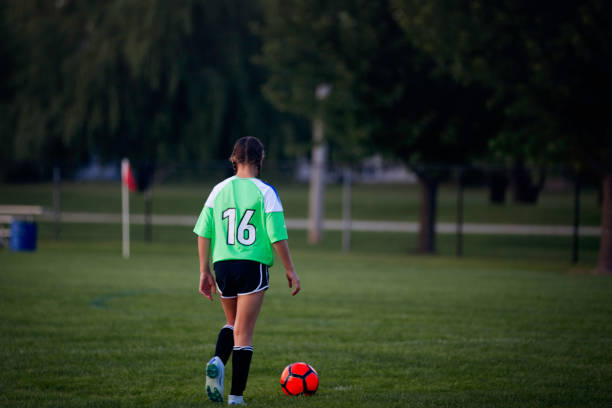
The exact search many young players and parents use is “How can a soccer player train alone if they only have a ball?”, and the practical answer is remarkably simple once you stop treating equipment or gears as the starting point.
Use the ball to work on close touches, dribbling, changes of direction, turns, receiving, weak-foot control, acceleration after touches and repeated combinations, while gradually making each exercise faster, less predictable or more demanding. Adding wall-based passing and receiving exercises can also give players a simple way to develop their first touch and passing accuracy while training alone.
The FA recommends that individual practice should progress from individual skills into combinations and eventually into game-like situations, while FIFA similarly stresses progressive sessions that move from technical foundations towards more realistic football problems.
That means your session should evolve rather than remain a collection of tricks, because the purpose of technical practice is eventually to make football actions easier to execute when another player is trying to stop you.
A 35-minute routine you can repeat
Five minutes: ball familiarity using both feet, soles, inside touches and outside touches, with the emphasis on keeping the ball close while gradually increasing your movement speed.
Eight minutes: footwork combinations involving toe taps, foundations, sole rolls, V-pulls and inside-outside touches, with shorter rest periods as your control improves.
Eight minutes: dribbling, changes of direction and turns through an imaginary course, followed by an acceleration after every successful change of direction.
Seven minutes: first-touch work using a wall where available, or controlled aerial touches when you have no suitable surface for passing.
Five minutes: weaker-foot challenge involving dribbling, turns and controlled touches, with the goal of completing the sequence cleanly rather than rushing through it.
Two minutes: finish with your favourite skill sequence at match-like speed, combining several movements and finishing each combination with a burst into space.
How Often Should You Practise Alone?
You will usually gain more from regular, focused sessions than from occasionally exhausting yourself for an hour and then disappearing from the ball for a week, because technical development depends heavily on repeated exposure and purposeful practice.
For a young beginner, three or four short sessions during the week can provide useful extra contact with the ball alongside normal team training and matches, while intermediate players can increase the frequency when their recovery, school schedule and team commitments allow.
FIFA’s grassroots guidance repeatedly stresses repetition, progressive practice and plenty of touches, while also warning against making technical work monotonous, so variety matters almost as much as volume.
A 20-minute session in which you concentrate properly on your first touch and weaker foot can therefore be more valuable than an hour spent mindlessly repeating tricks at full speed. Keeping these sessions short and focused also makes it easier for young players to build a consistent routine they can follow at home between team practices.
Biggest Mistake In Solo Training
The biggest mistake is confusing movement with improvement, because completing hundreds of touches means little if the ball keeps getting away from you, your body position is poor and you never progress towards actions that resemble football.
Start slowly enough to control every movement, build the speed only when your technique survives the increase, and then introduce decisions that force you to choose a direction, change pace or use another part of your foot.
FIFA’s current youth-development guidance supports this progression from technical foundations through increasingly game-like situations, while recent work with young players at clubs such as Legia Warsaw places heavy emphasis on scanning, receiving, movement and decision-making within realistic contexts.
That is also why your solo work should support, rather than replace, team football, because passing under pressure, reading opponents, combining with teammates and making decisions in crowded spaces still require interaction with other players.
Ball Is Enough
A ball and an empty patch of safe space can take you a long way, especially when you use them with a plan instead of waiting until you own every piece of training equipment advertised online.
Your aim should be simple: become more comfortable receiving the ball, more confident moving it with both feet, quicker when changing direction and cleaner when carrying the ball into space.
That is the foundation behind effective solo soccer training with no gear, and for a beginner or self-motivated youth player, it gives you something much more useful than a complicated equipment list: a routine you can repeat almost anywhere, measure over time and gradually turn into football skill.
READ ALSO | How Guest Playing Works in Youth Soccer: Rules, Permits, and Strategy