
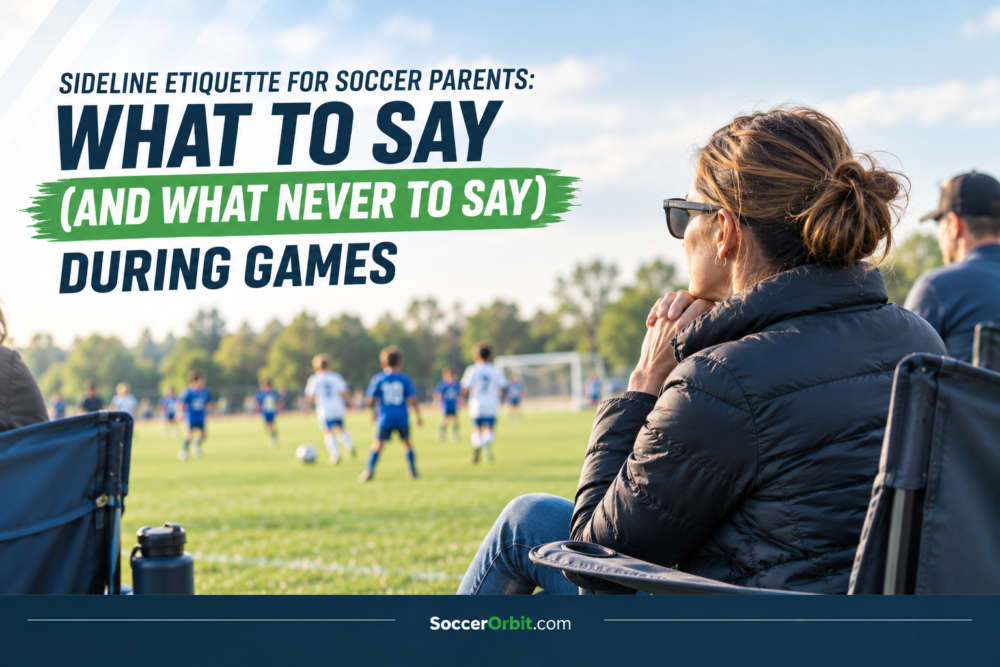
The ball reaches your child, three players close in, and before they can decide what to do, someone on the touchline shouts, “PASS IT!” Another voice demands a shot, a third calls for a clearance, and suddenly the simplest moment in a football match comes with instructions from half a dozen adults.
For the parents watching, it can feel like helping. For the child caught in the middle, it can feel like trying to solve a puzzle while everyone keeps changing the question.
Youth football brings out plenty of wonderful things in families, from the proud applause after a brave tackle to the shared excitement of a last-minute goal. It can also bring out the armchair manager in people who would never dream of interrupting a teacher’s lesson but have no trouble directing an entire midfield from behind the touchline.
Knowing what to say, when to cheer and when to stay silent can make match days more enjoyable for everyone. Good soccer parent sideline etiquette starts with a simple idea: encourage the child, respect the game and leave room for young players to think for themselves.
Why Shouldn’t Parents Yell Instructions From the Sideline?

The simple answer is that children need room to think, communicate with teammates and learn from their decisions without competing instructions from several adults.
A coach might ask a winger to stay wide and stretch the opposition, while a parent shouts for the same player to move inside. Another parent might demand an immediate pass when the coach wants the player to carry the ball forward and draw a defender out of position.
The parent may have watched professional football for decades, but the coach has responsibility for the team’s plan, training objectives and individual development.
More importantly, the player needs to learn how to read the situation rather than wait for an adult to solve it. When concerns about a child’s development or role in the team arise, parents can have a more productive conversation by learning how to approach their coach about playing time without undermining the coach’s decisions.
Research supports the concern. In a 2011 study published in Research Quarterly for Exercise and Sport, researchers Jens Omli and Diane M. Wiese-Bjornstal interviewed 57 children aged 7 to 14 about parental behaviour at youth sporting events. The children generally preferred supportive parents who cheered, praised effort and offered empathy, while sideline coaching could feel distracting or embarrassing.
The study does not mean every child dislikes hearing instructions from a parent, but it highlights a useful principle: support should help children enjoy and understand their sporting experience, rather than make them feel watched, judged or pulled between competing voices.
The Football Association’s respect guidance for parents and spectators makes the practical expectation clear: applaud effort and good play, respect match officials, and leave coaching instructions to the coach.
Cheering vs Coaching From the Sideline: Know the Difference
The difference often comes down to whether you are encouraging the player or trying to control the next action.
| Encouragement to use | Instructions to avoid |
|---|---|
| “Great effort!” | “Run faster!” |
| “Well played, everyone!” | “Pass it now!” |
| “Keep going, you’ve got this!” | “Get back into position!” |
| “Good idea, try again!” | “Why didn’t you shoot?” |
| “Unlucky, keep your head up!” | “You always do that!” |
| “Brilliant tackle!” | “Ref, are you blind?” |
Positive cheering recognises effort, teamwork, courage and good decisions without demanding a particular outcome. Coaching from the sideline attempts to direct positioning, tactics or technique while the game is happening.
There is also a difference between cheering for your child and treating every touch as a personal audition. Applaud the well-timed pass, the recovery run, the brave challenge and the teammate who created space for someone else to score.
A young player can have an excellent game without scoring, and a team can learn valuable lessons from a defeat. Parents who recognise those details help keep the experience bigger than the scoreboard.
READ ALSO | How To Shield The Ball Under Physical Pressure: Body Mechanics for Smaller Players
7 Things Soccer Parents Should Say During Games
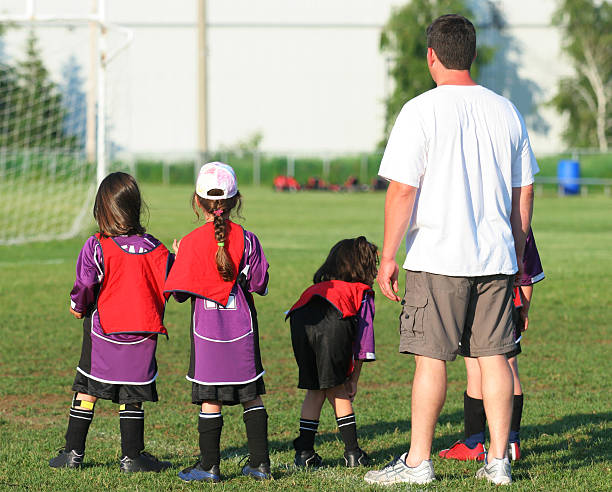
The best touchline comments are simple, supportive and useful across different ages and ability levels.
1. “Great effort!”
Praise the attempt, not only the outcome. A child who tries a difficult pass, tracks back after losing possession or challenges for a loose ball deserves encouragement even when the execution falls short.
2. “Keep going!”
Every player makes mistakes, including professionals who have spent years training. A calm reminder to continue playing can help a young footballer recover mentally instead of dwelling on the last error.
3. “Well played!”
Use this after good football, whether it comes from your child, a teammate or an opponent. Recognising intelligent movement and unselfish passing teaches children to appreciate the game beyond individual statistics.
4. “Good idea, try again!”
This is especially helpful when a player attempts something ambitious and gets it wrong. It encourages learning while making clear that one failed attempt does not need to become a reason to stop taking sensible risks.
5. “Unlucky, you’re still in it!”
A missed chance can feel enormous to a child who has replayed the moment in their head before the ball has even left the field. Offer reassurance without turning the mistake into a long discussion.
6. “Enjoy yourself!”
This is worth saying before kick-off, especially when a player feels pressure to impress a coach, earn a starting place or perform in front of scouts. A reminder to enjoy playing can restore perspective without dismissing the player’s ambitions.
7. “I’m proud of your effort.”
Save this for the moments when it matters, including a difficult match, limited playing time or a disappointing result. Children should know that your affection and support are not conditional on goals, wins or selection decisions.
You do not need to deliver all seven lines in every match. A smile, a round of applause or a moment of attentive silence can sometimes offer more support than another shout from the touchline.
READ ALSO | How to Curve a Soccer Ball: Inside and Outside Foot Technique
6 Things Soccer Parents Should NEVER Say During Games
Certain comments create unnecessary pressure, embarrass young players or encourage disrespectful behaviour.
1. “What are you doing?”
This usually arrives after a mistake and gives the player no useful information. The child already knows the pass went astray or the shot missed the target, so adding public criticism rarely helps them recover.
Say instead: “Keep your head up. Next one.”
2. “Pass it! Shoot! Clear it!”
These are classic examples of joystick coaching soccer, where a parent tries to control a player’s movements and decisions from the sideline as if operating a video-game character.
Even when the instruction sounds sensible, the player may have a better view of the situation or be following a different tactical instruction from the coach.
Say instead: “Come on, team!” Then let the player make the decision.
3. “That referee is useless!”
Referee abuse in youth soccer can quickly turn a children’s match into an argument between adults. Officials may make mistakes, but shouting insults teaches young players that authority deserves respect only when decisions go their way.
This matters particularly in grassroots football, where some officials are young or relatively inexperienced and are still developing their skills.
Say instead: Nothing during the decision. If there is a serious concern about safety or conduct, raise it calmly through the appropriate club or competition process.
4. “Why can’t you play like him?”
Comparing a child with a teammate, sibling or opponent turns football into a public ranking exercise. It can also create resentment between teammates who should be learning to trust one another.
Say instead: “Keep working on your game. I can see the effort you’re putting in.”
5. “You’d have scored if you listened to me!”
This shifts the focus from the player’s development to the parent’s need to be right. It also reinforces the idea that the child should obey instructions from the sideline rather than assess the game independently.
Say instead: “What did you see in that moment?” Save the conversation for after the match, when the player has had time to think.
6. “You’re embarrassing me!”
Few comments place more emotional weight on a child’s performance. The match belongs to the players, and they should not feel responsible for protecting an adult’s pride or reputation.
Say instead: “I’m here for you, whatever happens.”
How to Handle Referee Decisions Without Losing Your Cool
A disputed penalty, a questionable offside decision or a late tackle can test even the calmest parent, particularly when the match is close and emotions are running high.
Start by remembering that the referee is managing the match from a different position, with a different view of the incident. You may disagree with a decision, but shouting from the sideline is unlikely to change it and can make the environment more hostile for everyone.
Follow these steps when frustration starts to build:
- Pause before reacting. Take a breath and give yourself a moment before shouting anything you might regret.
- Keep comments respectful. Avoid insults, threats, sarcastic applause and personal remarks about the referee.
- Do not encourage retaliation. Never tell a child to foul an opponent, seek revenge or challenge the official aggressively.
- Use the proper reporting route. If you have a serious concern about misconduct, discrimination or player safety, record the relevant details and contact the coach, club welfare officer or competition organiser as appropriate.
- Walk away if necessary. If you feel yourself losing control, step back from the touchline rather than allowing frustration to dictate your behaviour.
The FA’s respect and safeguarding guidance outlines the responsibilities of parents, clubs and officials in creating safer environments for young players. FIFA’s guardians safeguarding programme likewise promotes football environments that protect children from abuse, harassment and exploitation.
Respecting a referee does not mean ignoring serious misconduct. It means addressing concerns through appropriate channels rather than turning the touchline into a confrontation.
READ ALSO | How to Improve Your Weak Foot in Soccer: A 30-Day Solo Progression
A Step-by-Step Match-Day Guide for Soccer Parents
Good sideline behavior becomes easier when you decide what your role will be before emotions take over.
Step 1: Agree on expectations before the game. Ask your child what kind of support they find helpful, whether that means hearing encouragement, having you cheer for the team or simply knowing you are watching.
Step 2: Choose your touchline rule. Decide that you will cheer effort and good play but leave tactical instructions, positioning and technical corrections to the coach.
Step 3: Watch the whole game, not only your child. Notice the teamwork, movement and decisions happening around the ball, and resist the temptation to react to every touch as though it determines the player’s future.
Step 4: Manage your own emotions. If the referee makes a decision you dislike or your child misses a chance, take a breath before speaking. Your body language matters too, because a frustrated expression can communicate disappointment even when you say nothing.
Step 5: Respond to mistakes with encouragement. A misplaced pass is part of learning football, not an invitation to deliver a technical lecture from twenty metres away.
Step 6: Let the coach handle coaching questions. If you have concerns about tactics, playing time or development, arrange a calm conversation away from the match rather than challenging the coach in front of the players.
Step 7: Ask about the experience afterwards. Start with “Did you enjoy yourself?” or “What was your favourite moment?” rather than immediately asking about goals, mistakes or the final score.
Step 8: Listen before giving advice. If your child wants to discuss a difficult moment, let them explain what happened and what they were thinking. Offer suggestions only when they want them or when a conversation is genuinely helpful.
Step 9: Keep perspective after a loss. Give your child time to process the result before analysing the performance. Sometimes a meal, a lift home and an ordinary conversation are exactly what the player needs.
Step 10: Review your own behaviour. After the match, ask yourself whether your comments encouraged the child or added pressure. If you crossed a line, acknowledge it and make a conscious effort to respond differently next time.
What If Other Parents Are Shouting From the Sideline?
It can be uncomfortable to hear another parent criticise a player, abuse the referee or shout instructions throughout the game, particularly when the behaviour is affecting your child or the wider team.
Avoid getting drawn into a public argument, which can quickly turn a youth match into a dispute between adults. If it feels safe and appropriate, speak privately with the parent after the match, focusing on the behaviour and its effect rather than attacking their character.
If the problem continues, raise it with the coach, club official or designated welfare contact. Serious threats, discriminatory abuse or conduct that puts a child at risk should be reported through the relevant safeguarding or competition channels.
The goal is not to police every cheer or demand that spectators sit in silence. It is to keep the environment supportive, safe and focused on the children playing.
READ ALSO | Can American Youth Players Join European Academies: FIFA Rule 19
The Best Thing a Soccer Parent Can Do
Children need parents who care about their football, but they also need space to discover what kind of player they can become. That means allowing them to make decisions, experience setbacks, celebrate improvements and build confidence without feeling that every mistake will trigger a lecture from the touchline.
The best soccer parent sideline etiquette is not about finding the perfect phrase for every moment. It is about understanding when encouragement helps, when silence gives a player room to think and when an adult needs to step in to protect a child’s safety.
So cheer the clever pass, applaud the recovery run and encourage the player who gets back up after losing the ball. Leave the tactics to the coach, the decisions to the referee and the game itself to the children.
Your child should remember the football they played, the teammates they enjoyed and the things they learned, not spend the drive home replaying something you shouted from the sideline.